09th October 2026
Digital Health Coffee Time Briefing ☕
Read More >>

8th October 2026
Cooler days and falling leaves signal the end of another summer, and while cozy season is just around the corner, so is peak dust mite season. “Autumn marks the peak for dust mite proliferation and symptom flares,” says Professor George Du Toit, Co-Founding Director and Professor of Paediatric Allergy at the Allergy Centre of Excellence (ACE).
That flare-up is triggered when you turn your indoor heating on, trapping summer humidity inside sealed rooms and sparking an allergen surge.
While studies show that dust mites thrive in the dark, humid layers of your mattress, their food source is mainly found in the top two to four inches of your mattress. This zone traps dead skin cells, body oils and moisture, creating a feast for dust mites (and a nightmare for people with allergies).
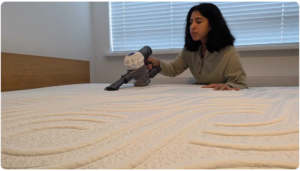
To reduce dust mites in your mattress, it’s critical to remove as much of their food supply as possible. A quick surface vacuum won’t cut it, so I’ve been testing out the ‘2-inch rule’, which uses compression to go deeper into my mattress’s cover.
Here’s how to use the ‘2-inch rule’ yourself and why this compression technique was more effective for me…
“As homes turn on central heating, indoor air dries out,” explains Dr. Du Toit. “While this might sound unfavourable, the rapid temperature drop outdoors combined with sealed windows initially traps high indoor humidity accumulated over summer, creating an optimal breeding surge.”
While this autumn heating surge is most acute across the UK, the northern US and Midwest, anyone shutting up their doors and windows after a humid summer will face some degree of an allergen spike.
“Summer breeding cycles reach maximum population densities by late summer,” continues Dr. Du Toit. “As autumn [Fall] arrives and humidity fluctuates, many mites die off, releasing massive loads of dried faecal allergen particles into the indoor air just as people spend more time indoors with windows closed.”
We shed about 500 million dead skin cells every day, and a large portion of those end up in the top layers of our beds. Gross, right?
Glen Needham, a retired professor of entomology at Ohio State University, notes that dust mites populate the top layers of a mattress, beneath the cover, to feed on those delicious flakes of dead skin.
The ‘2-inch rule’ refers to applying firm, downward pressure of your vacuum’s nozzle to compress the top two inches of your mattress. By flattening it with the nozzle, and creating a tight seal, you’ll be able to pull out embedded skin cells, dead dust mites, and fecal particles. Yep, we’re talking dust mite poop.
What the 2-inch rule doesn’t do: It won’t remove live colonies of dust mites as that requires high heat (like steam cleaning or washing bedding at 140°F/60°C) or a specialized UV mattress vacuum.
However the 2-inch rule will remove their food source so the dust mites die off faster. It will also remove dust mite fecal matter and lower the amount you breathe in from your bed each night.