09th October 2026
Digital Health Coffee Time Briefing ☕
Read More >>

8th October 2026
As Autumn sets in many household pests enter their peak seasons. And while spiders and mice are not exactly hard to miss, there is another culprit that escapes the eye and could be spiking your allergies.
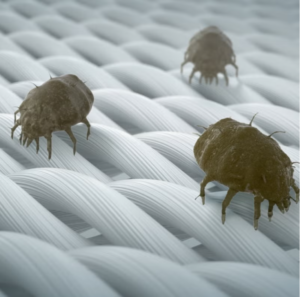
Dust mites may seem like a minuscule issue, but in reality, they could be the reason you’ve been feeling under the weather. Coughing, congestion and sneezing could all be signs that your home is playing host to this seasonal pest. What you might’ve thought was hay fever, could be something else entirely.
I’ve been chatting to experts to find out exactly why they are so prevalent this season, the signs that you’re home may have a problem and how to put a stop to them. Here’s what I found.
Dust mites are present in our homes all year round, but their numbers and the allergens they leave behind can build up during late summer and early autumn, as homes become warmer and more humid thanks to the weather and us starting to pop the heating on. Turns out, bugs like to be cosy, too.
As Professor George Du Toit, Co-Founding Director at the Allergy Centre of Excellence, explains: ‘As UK temperatures drop, residential properties undergo significant environmental changes, trapped heat and moisture being one. Homes are sealed against the cold with closed windows and double glazing while central heating elevates indoor temperatures into the optimal 20°C to 25°C range.’
It’s not just the temperature that creates a mite-friendly home, either. ‘Mites absorb atmospheric moisture rather than drinking. They thrive when relative humidity exceeds 50%. UK relative humidity at this time of year typically ranges from 70% to 90%, sustained by a temperate maritime climate,’ Professor Du Toit adds.
Together, these conditions give dust mites the ideal environment to thrive, particularly in bedding, mattresses, carpets and upholstered furniture. As we head into autumn, we also tend to spend more time indoors, use heavier duvets and keep windows closed, increasing our exposure to the allergens that can trigger sneezing, a runny nose, itchy eyes and asthma symptoms.
I myself have been sneezing non-stop recently. I thought it was late-season hay fever — but after chatting with the experts, I’m not so sure.
‘A dust mite allergy is an immune system reaction to dust mites. Rather than biting humans, these creatures feed on shed human skin scales, hair strands and nail clippings found in beds – a particular issue for children with eczema who shed skin rapidly due to scratching,’ says Professor Du Toit.
‘The allergy is triggered specifically by proteins found in their waste products and decomposing bodies,’ he adds – a truly disgusting image.
When a sensitive person inhales dust mite proteins, our immune systems mistakenly identify these harmless substances as dangerous invaders. ‘Upon subsequent exposure, these antibodies trigger immune cells to release inflammatory chemicals like histamine, causing airway, nasal and skin inflammation.’
Signs you or your home could have an issue include: